Why BBC Good Food Show Was the Perfect Stage for CoffeeB's UK Moment
The UK is one of Europe's largest coffee-consuming markets, and its appetite for premium, convenient coffee has never been stronger. But that growth has come at a cost. An estimated 800 million to 1 billion coffee pods are used in the UK each year, with most made using aluminium or plastic. When you pair that with the fact that around 29,000 pods end up in landfill every minute globally, and fewer than 1 in 3 aluminium pods are recycled in the UK, the environmental impact of the single-serve coffee market is hard to ignore.
The BBC Good Food Show offered the ideal platform to make that case. Not through an advert or a shelf display, but through a live, immersive experience at the heart of one of Britain’s most engaged food and drink communities. It was exactly the audience ready to see that single-serve coffee could be done differently and to understand what we mean when we say "CoffeeB does not make a better pod. CoffeeB removes the pod entirely."
Reaching the UK's Most Passionate Food and Drink Audience
The BBC Good Food Show attracts a demographic that does not settle. These are educated, values-driven consumers, predominantly Gen Z and Millennials, who seek products that align with their lifestyle and their conscience. They have grown up in the speciality coffee era. They understand craft. And they are increasingly aware of the environmental cost of the habits they have built around convenient capsule coffee.
With nearly 56% of coffee-loving Brits now owning an at-home coffee machine, the single-serve market is not going anywhere. But this audience is precisely the segment looking for a way to enjoy that same convenience without the waste. CoffeeB arrived at the BBC Good Food Show not to compete in the capsule category, but to make the case that the category itself no longer needs to exist.
Step Inside: The 10-Metre CoffeeB Dome Experience
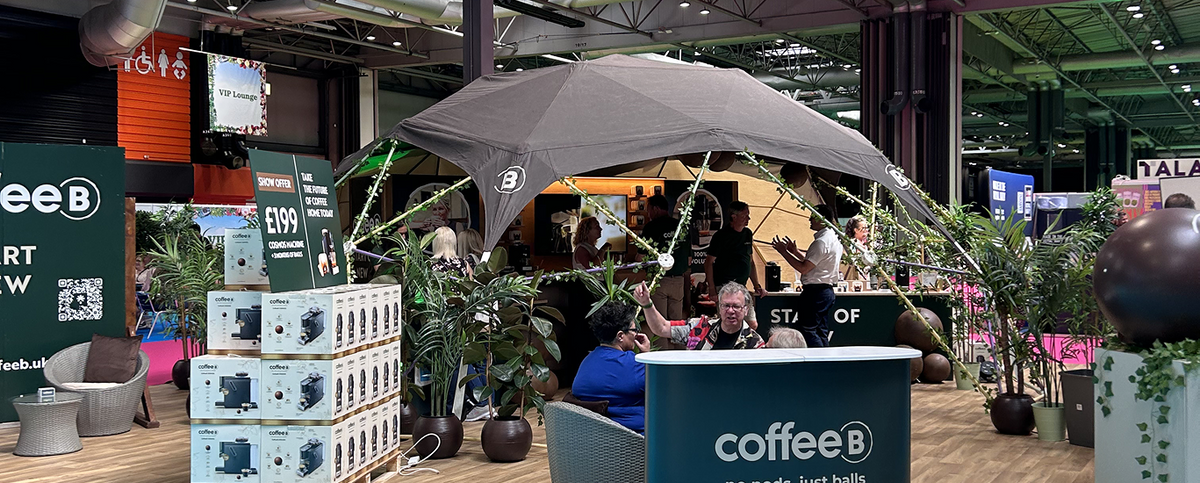
Walking into the CoffeeB dome at the BBC Good Food Show Summer 2026, visitors were stepping inside a statement. It was designed to immerse as much as it was built to surprise, capturing the attention of the 30,000+ people who came through the NEC over its four-day run.
The 10-metre CoffeeB dome created an immediate sense of intrigue. Its huge, rounded form, open sides and surrounding greenery made it feel less like a conventional exhibition stand and more like a temporary world built around CoffeeB. It was designed around one central idea: that the future of coffee should feel as extraordinary as it tastes and its shape offered a pretty big clue as to what made CoffeeB different.
Every element of the space was designed to draw people in and engage the senses: Coffee Balls displayed where familiar foil capsules would normally sit, the aroma of freshly brewed espresso, the hum of the Cosmos machine, and the surprise of watching a portioned coffee system work without a pod or capsule in sight.
For many visitors, the reaction was immediate: disbelief. A portioned coffee system. No pod. No capsule. So what was it? The answer was all around them, with the dome’s rounded form designed as an oversized nod to the Coffee Ball itself.
That moment of surprise was the point. CoffeeB is not an incremental improvement on what came before. It is the start of something new, and the dome gave that idea a physical presence people could walk into, experience and remember.
From Ball to Cup: Live Tastings and Demonstrations
You can describe a Coffee Ball. You can explain how a thin, plant-based biopolymer film replaces the need for a plastic or metal shell, how it protects the aroma and maintains the coffee's shape without vacuum-sealing or aluminium foil. But until you taste the result, it remains theoretical. The live tastings at the BBC Good Food Show removed all doubt.
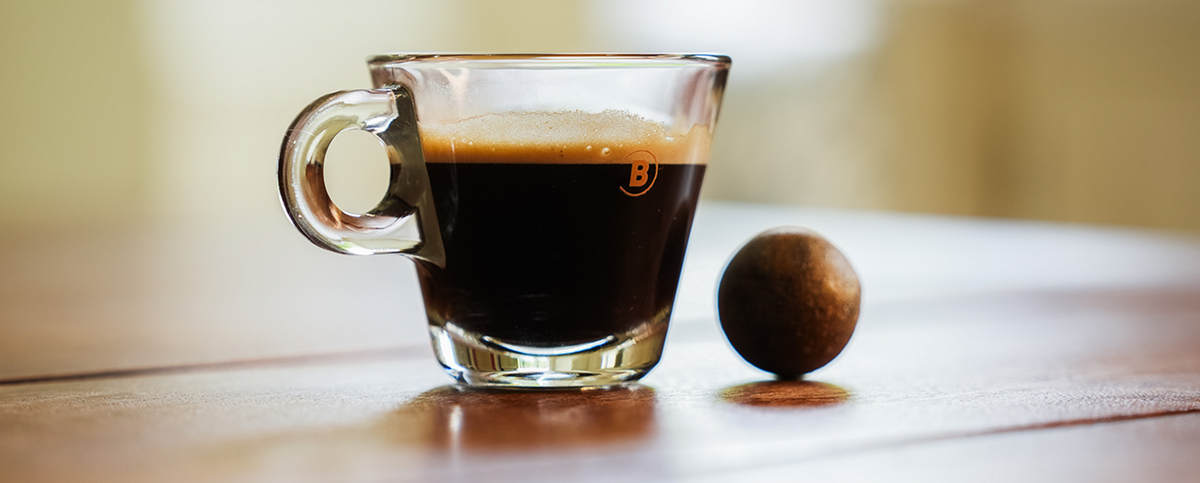
Each Coffee Ball contains between 5.3g and 5.9g of high-quality roasted and ground coffee. The biopolymer coating is not packaging in the conventional sense. It is a breathable, protective film that keeps the coffee intact and fresh, and then simply composts away after use. Visitors tasted every espresso and lungo blend in the range, experiencing the Crema della Crema that CoffeeB's Swiss engineering is built to deliver.
The CoffeeB Cosmos Machine in Action
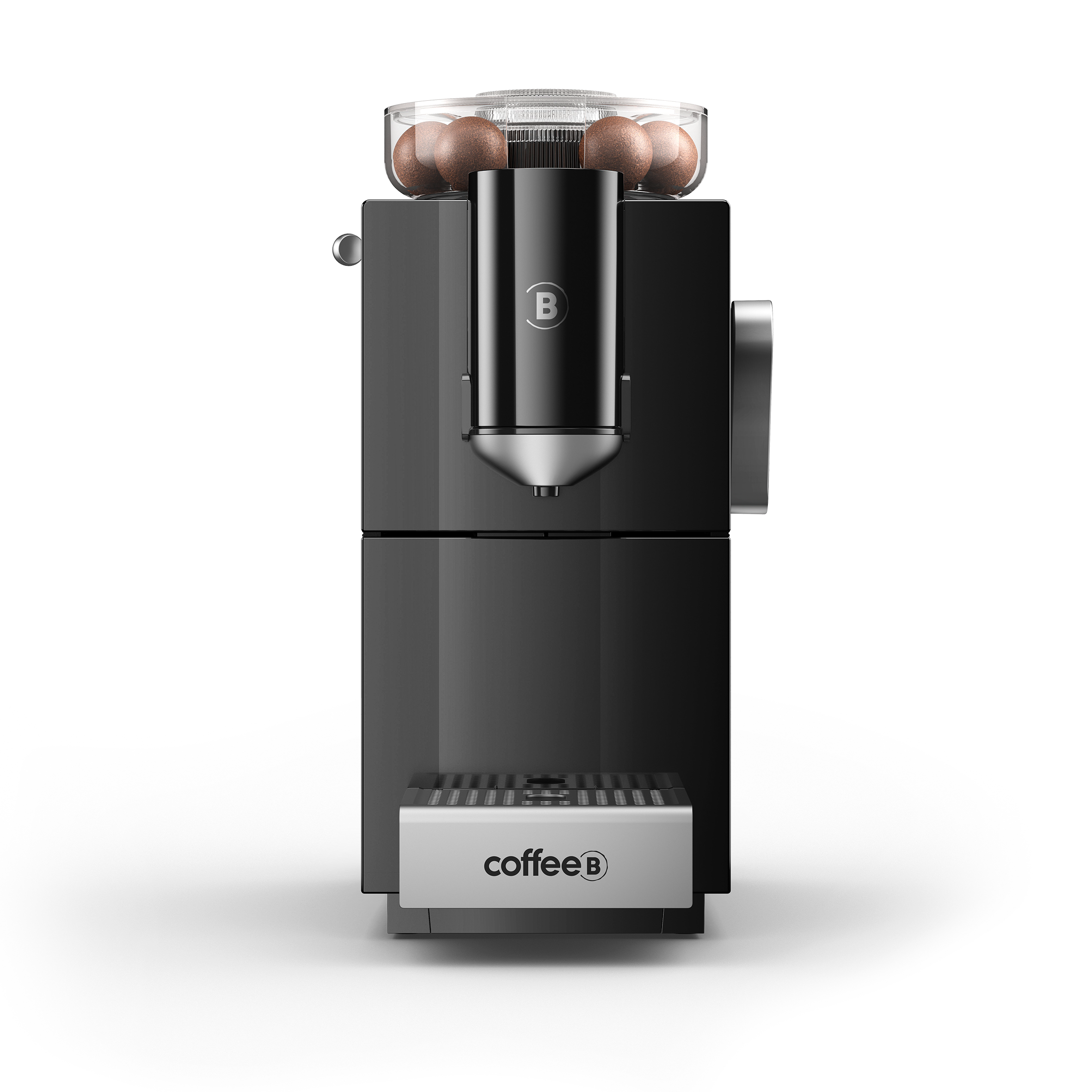
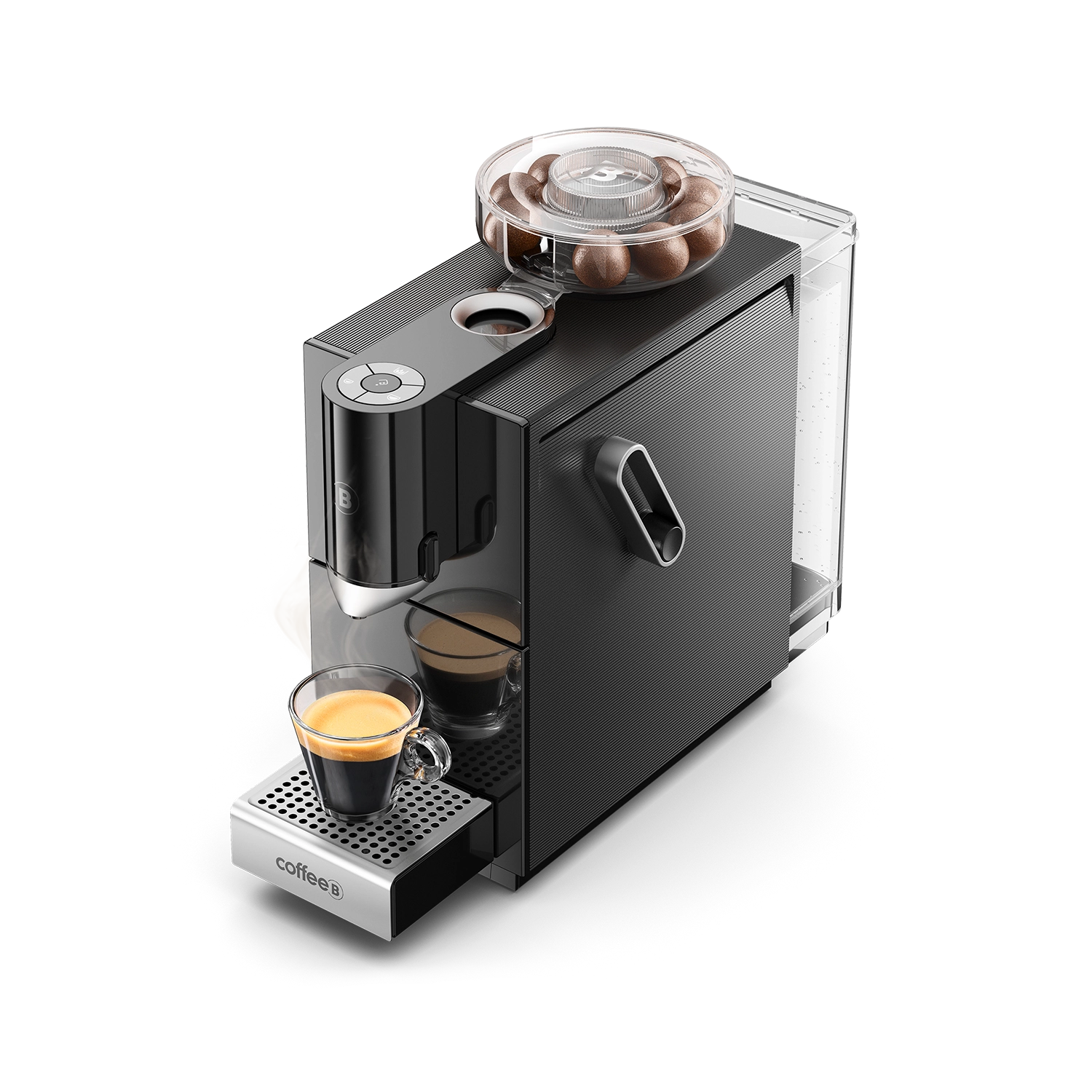
At the heart of every demonstration was the Cosmos, CoffeeB's flagship brewing system. The Cosmos features a height-adjustable spout, one-touch operation, and a patented brewing chamber built for capsule-free coffee. There is no capsule to pierce, no spent casing to eject, and nothing to collect in a recycling bag, or worse, throw in the bin. The Coffee Ball enters the chamber, the coffee is extracted, and what remains from the coffee grounds to the protective biopolymer layer included - all fully compostable.
Watching the Cosmos in action is its own kind of proof. The machine is as simple to use as any pod system on the market, and the result in the cup is indistinguishable from a premium espresso bar. CoffeeB's pitch is not that consumers need to sacrifice convenience for sustainability. It is that they never had to choose between the two.
What Customers Experienced Inside the CoffeeB Dome
The show floor offers something no marketing campaign can replicate: the moment a real coffee drinker picks up a Coffee Ball for the first time, turns it over in their hands, and asks the question nobody has had to ask before: where is the pod?
For visitors discovering coffee without a pod for the first time, you could see the moment it landed. Even the most coffee-savvy consumers would walk up saying, “Oh, another coffee machine,” then do a double take when they realised there was no pod at all. That reaction, and the conversation that followed, is exactly the one CoffeeB wants to have with the UK. Because it reveals just how deeply ingrained the assumption of waste has become in single-serve coffee. Consumers have come to accept the pod as inevitable: something to be recycled, sent through specialist schemes, or simply thrown away.
The UK's existing pod recycling infrastructure makes clear how difficult the status quo has become. Morrisons became the first UK supermarket to introduce in-store coffee pod recycling points through the Podback scheme, a meaningful step, but one that still requires consumers to collect used pods in dedicated bags and travel to a drop-off point. Participation in equivalent voluntary collection schemes across other regions has been estimated at a maximum of 29%.
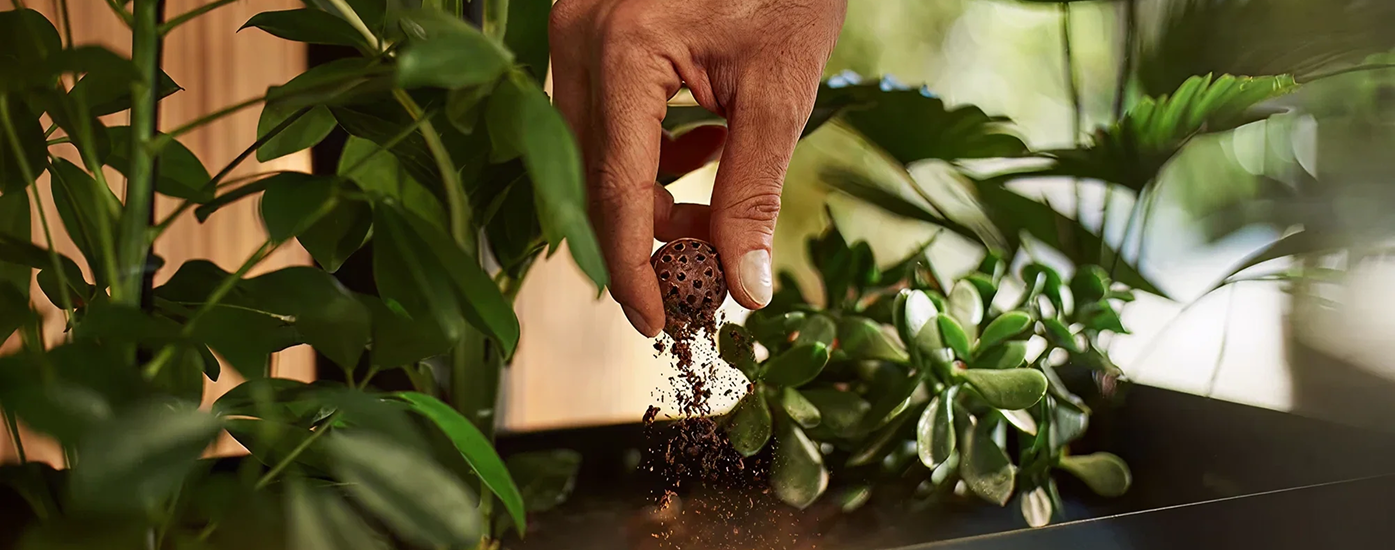
Inside the dome, visitors encountered a different proposition entirely. CoffeeB is not trying to make pod recycling easier. It is designed to remove the pod from the equation altogether. There is nothing to collect, sort or return; once brewed, the Coffee Ball can go straight into the compost.
Meet the People Behind the Ball
There is a significant difference between reading about a technology and hearing it explained by the people who are building the brand. At the BBC Good Food Show, the creators of CoffeeB stepped off the stage and onto the show floor, speaking directly with the consumers they knew they needed to win over. They answered questions face-to-face, shared the thinking behind the system, and showed exactly how the technology works in practice.
For a product as new to the UK market as CoffeeB, that directness matters enormously. The Coffee Ball represents a significant departure from thirty years of category convention, so consumers naturally want to understand how it works. When the founders themselves were the ones explaining how the biopolymer coating was developed and how the Cosmos machine achieves extraction without a capsule, the conversation becomes an opportunity to unpack the engineering, the materials and the thinking behind the product in real time.
Modern consumers, particularly within the UK’s coffee community, are highly knowledgeable about what they drink and how it is made. They research, question and scrutinise. Meeting that curiosity with technical confidence from the people who understand all areas of the product creates a level of trust that no campaign can manufacture.

- The creators at the BBC Good Food Show were not there to pitch, they were there to prove.
Coffee Without Compromise: The Sustainability Story
CoffeeB’s sustainability credentials are not a positioning choice. They are an engineering outcome. The decision to remove the pod was a design decision, with the environmental benefit built into the product itself. That means sustainability does not need to dominate the conversation; it is simply part of how CoffeeB works. Discover how CoffeeB is rethinking waste in single-serve coffee.
What Great Coffee Without the Pod Means for the Planet
The Coffee Ball has been assessed against traditional single-serve formats across multiple environmental metrics, and the results are consistent across independent research. Less packaging, more coffee.
Life cycle assessment research into coffee packaging shows that CoffeeB uses up to five times less packaging material per unit of coffee compared to traditional plastic capsules. The thin biopolymer coating that protects each Coffee Ball is a fraction of the material required by the aluminium and polypropylene shells found in conventional pods.
A smaller carbon footprint. A single cup brewed with a Coffee Ball generates approximately 24g of CO2 equivalents. Research into the environmental impact of coffee packaging formats shows that traditional capsule formats produce up to 41g of CO2 equivalents per cup. That is nearly double the footprint of a Coffee Ball, cup for cup.
Less total waste per cup. Independent life cycle assessment research confirms that Coffee Balls generate significantly less total waste per serving than coffee pads, and produce zero plastic or aluminium pod waste of any kind.
Truly circular. When composted, the entire spent Coffee Ball, coffee and coating together, returns to the soil as nutrients. It does not need to be sorted, cleaned, or taken to a specialist recycling point. Traditional aluminium capsules, even those made with recycled content, still require virgin materials in every production cycle and can never fully close the loop. See how CoffeeB closes that loop
CoffeeB is Now Available in the UK
The BBC Good Food Show was not a launch event in the conventional sense. It was an opening statement for CoffeeB in the UK, bringing a completely different approach to single-serve coffee face-to-face with consumers for the first time. Every visitor who stepped inside the dome, tasted a Coffee Ball and asked, “Wait, there’s no pod?” became part of that beginning. The Founders Club was created for exactly this community: people who want to discover what comes next early and help shape the journey as CoffeeB grows in the UK.
CoffeeB is now available to buy online, bringing portion-controlled, capsule-free coffee to people looking for convenience without the familiar pod. The UK’s relationship with coffee has changed profoundly over the past two decades. CoffeeB believes the next shift has already begun. Shop the Founders Bundle and experience CoffeeB for yourself.
Related Products
Continue reading
Why We Built CoffeeB: The Story Behind the Brand
Why should great single-serve coffee create so much waste? Discover how five years of innovation led to a completely new capsule-free system built around great coffee and no unnecessary wa...
The Future of Sustainable Coffee: Science, Innovation and Why CoffeeB Is Different
Discover the future of sustainable coffee with CoffeeB's launch in the UK. Learn how science and innovation replaced single-use pods with a garden-compostable coffee ball.