There's a small, quiet contradiction hiding in millions of kitchens every morning. We love the speed and consistency of single-serve coffee, the press of a button, the perfect cup, but a part of us knows what gets thrown away afterwards. For decades, the industry treated that trade-off as the price of convenience. This is the story of how science finally refused to accept it, told through one of the people who helped engineer the answer.
From Whole Beans to a Ball You Can Compost in Your Garden
Coffee at home has moved through distinct chapters. In the first, preparation was slow and manual: coarsely ground beans tipped into a pot, jug or cafetière with hot water, with instant coffee long the affordable default in many British kitchens.
The second chapter arrived with the single-serve capsule, a Swiss invention from 1976 that revolutionised home brewing by making it faster, easier and more consistent: barista-style results at the touch of a button. It was, for a long time, simply too convenient to abandon.
Now there is a third chapter. Launched in 2022, the Coffee Ball is not a better capsule, but a different category of single-serve coffee entirely. It returns to the simplicity of pressed coffee while retaining the rigorous precision of modern extraction. As CoffeeB’s development team puts it, the aim was never to improve the pod, but to ask whether the pod needed to exist at all.
Did You Know?
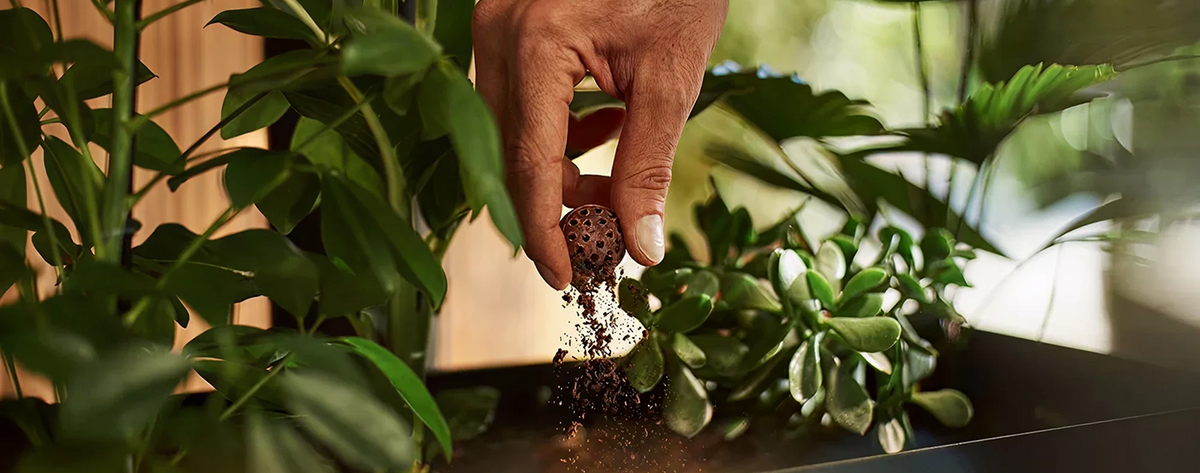
A brewed Coffee Ball can break down in a home compost heap in as little as 4-12 weeks.
"When I was first asked to create a capsule without a capsule, it honestly felt like a mission impossible. But that's exactly where innovation starts: challenging assumptions and finding solutions where none seem to exist." - Caroline Siefarth, Coffee Research & Development Expert, Food Technologist behind CoffeeB
The Convenience We Loved, the Waste We Didn't See
Single-serve coffee solved one problem and quietly created another. Traditional capsules are typically made from aluminium and plastic fused together, materials that are difficult to separate and recycle. The bin labelling often implies a tidy ending, but the reality is messier: around 70% of coffee capsules are eventually thrown away, and in the UK it's estimated that fewer than 25% of aluminium capsules are actually recycled, partly because they often have to be sent back to specific facilities for processing.
This isn't a reason to feel guilty about your morning cup but it is a reason to be curious about what comes next, because the scale of the problem is striking. 100,000+ tonnes of plastic and aluminium capsule waste are produced by the industry every year. Put another way: roughly 20 billion capsules annually, enough to circle the Earth 14 times.
You can read more about how CoffeeB approaches this on our Why Switch page. For the industry-wide figures, independent bodies such as WRAP and the European Environment Agency track packaging waste in detail.
So, What Exactly Is a Coffee Ball?
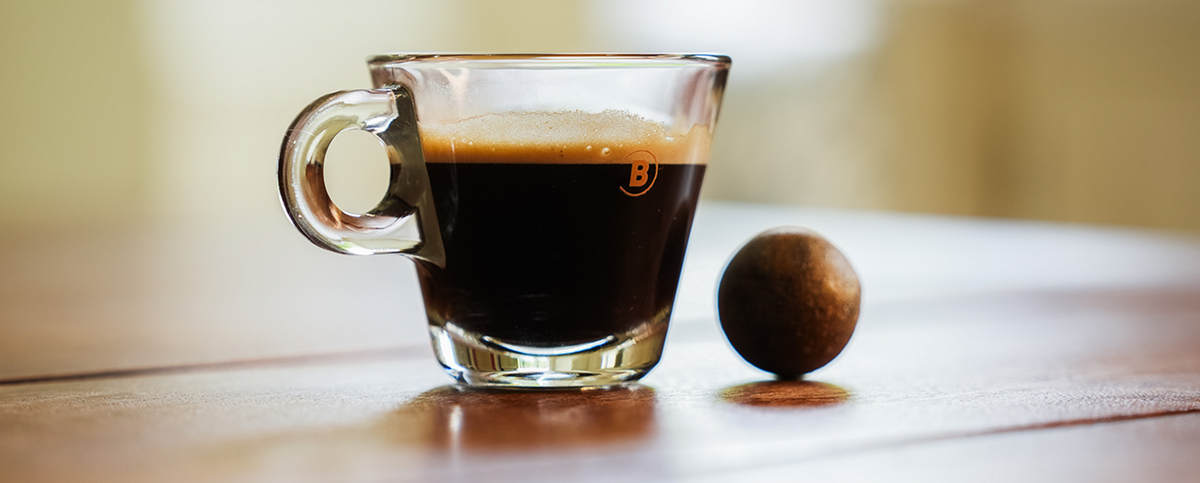
Here is the simple version. A Coffee Ball is a compact sphere of freshly roasted and ground coffee, and nothing else you’d need to throw in the bin. There is no aluminium and no plastic. Each ball holds roughly 5.7g to 6.2g of coffee, about the same as a standard high-quality espresso capsule.
In the hand it feels like a solid, stable portion you can handle just like a normal capsule, except there’s no casing to peel off, recycle or discard once you’re done. That’s the whole idea, and you can see how the ball itself works in more detail.
The Science Behind the Layer That Replaces the Capsule
This is the part most people find surprising. If there's no aluminium shell, what keeps the coffee fresh, holds its shape and survives the pressure of brewing?
The answer is a thin, patented, plant-based protective layer. And engineering it took five years.
"Our mission was to create a capsule without a capsule. We needed a natural material that could protect freshly roasted coffee, preserve its quality and still deliver a great cup. After years of research, alginate proved to be the breakthrough that made the Coffee Ball possible." - Caroline Siefarth, Coffee Research & Development Expert, Food Technologist behind CoffeeB
The layer's primary ingredient is alginate, a natural polymer derived from brown seaweed, sourced from the coastal regions of Brittany and combined with a few other plant-based components such as cellulose fibres for structure. It does three jobs at once. It holds the pressed coffee in its spherical shape during transport and handling. It acts as a natural oxygen barrier, guarding the roasted grounds against oxidation and preserving aroma and freshness for up to 14 months. And it's engineered to be tasteless, colourless and water-insoluble, so it never dissolves into your cup.
The payoff comes during brewing. Inside the machine, the ball is bathed in water, punctured, inflated and extracted at 7 to 12 bar, the pressure range required for authentic espresso. The protective film withstands all of that without breaking down into the drink. Instead, it stays on the spent ball and is ejected, intact, into the collection tray, ready for the one job it has left to do: break down completely.
The Difference Garden Compostable Coffee Balls Make
"Compostable" is one of those words that sounds reassuring but hides an important distinction. Many compostable pods on the market are only industrially compostable; they need the high heat and controlled conditions of a professional facility to break down. In regions like the UK, where that infrastructure isn't widespread, those pods frequently end up in landfill anyway.
The Coffee Ball clears a meaningfully higher bar. It's 100% garden compostable, certified by the DIN CERTCO institute, meaning it breaks down in an ordinary domestic compost heap, wormery or bokashi bin, with no specialist facility required.
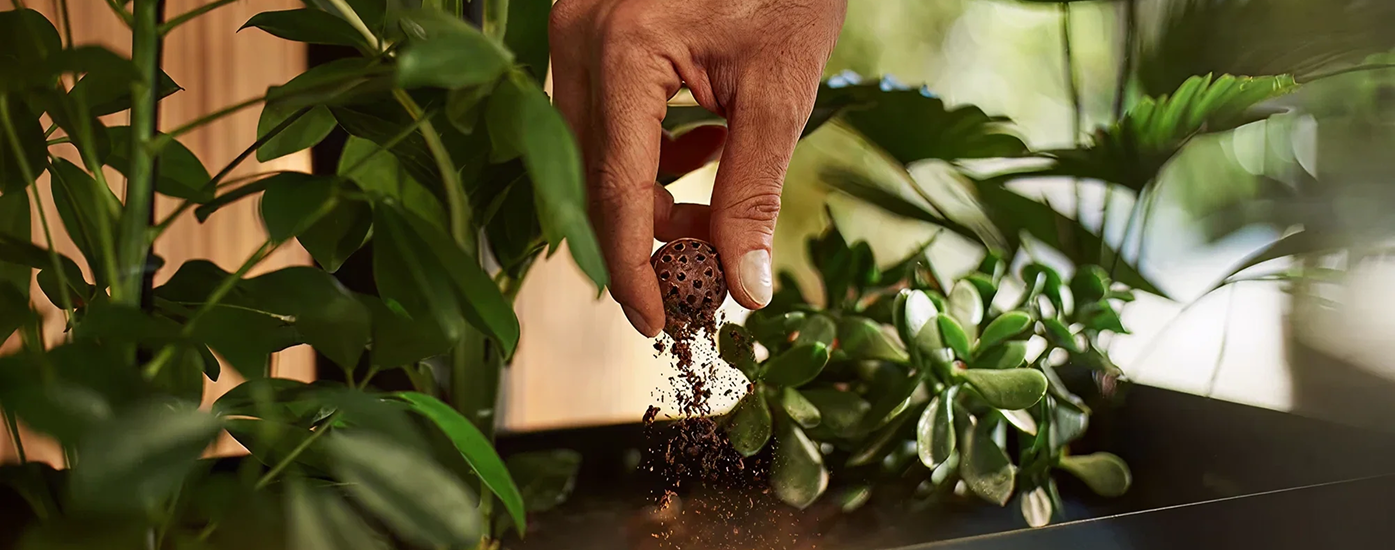
4 to 12 weeks is all it takes for a spent Coffee Ball to decompose into valuable humus in a standard garden compost heap, against the half a millennium (around 500 years) that a traditional plastic pod can take to break down in landfill.
Because used coffee grounds are rich in nitrogen, phosphorus and potassium, the spent ball even acts as a natural fertiliser, closing the loop by returning to the soil where it began.
Great Coffee. Zero Compromise on Taste.
Here is the principle the whole system is built around: sustainability that costs you flavour won’t last, because no one repeats a worse cup of coffee. The Swiss engineering exists in service of taste, not the other way round.
And removing the capsule turns out to be good for the cup, not just the planet. Because the coffee never touches plastic or aluminium, there are none of the metallic or plastic “side flavours” that capsules can sometimes impart, just pure coffee. In professional blind taste tests, our capsule-free system performed as well as conventional coffee capsules, with reviewers describing a well-balanced cup, typically low in acidity with a subtle sweetness reminiscent of chocolate or stone fruit.
The selection of roasts and intensities spans balanced lungos, bold espressos and ristrettos, with decaf and organic options, and signature blends from iconic guest roasters like illycaffè brought into the ball format to keep world-class taste at the centre.
Meet Caroline Siefarth, the Expert Behind the Method
Every breakthrough has a human story behind it, and CoffeeB's runs through Dr Caroline Siefarth, a food technologist and R&D expert at Delica, Migros's subsidiary. Holding a PhD in food chemistry with a focus on odour and flavour research, she is credited as a co-developer of the system and led the five-year process that turned a "mission impossible" into a product on the shelf.
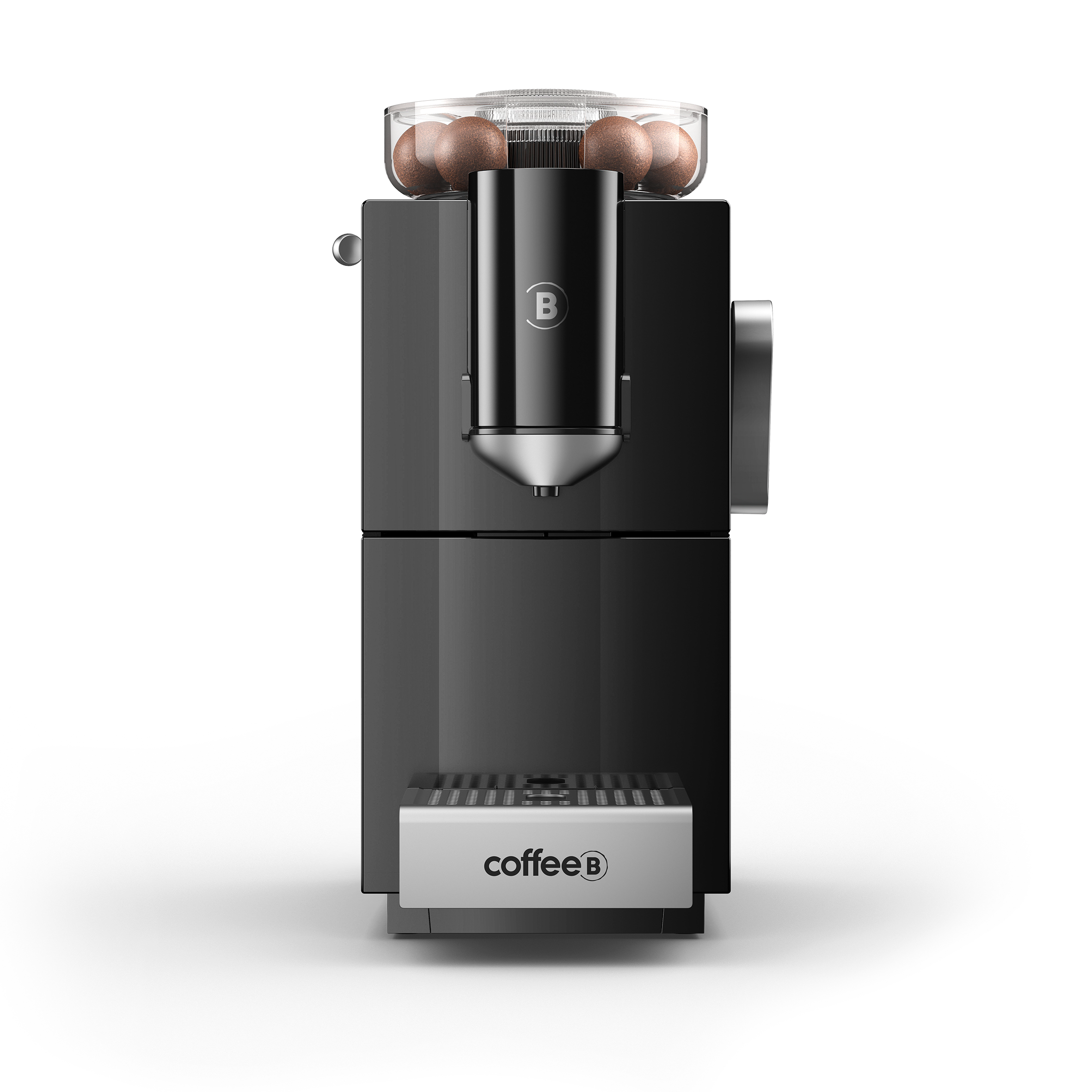
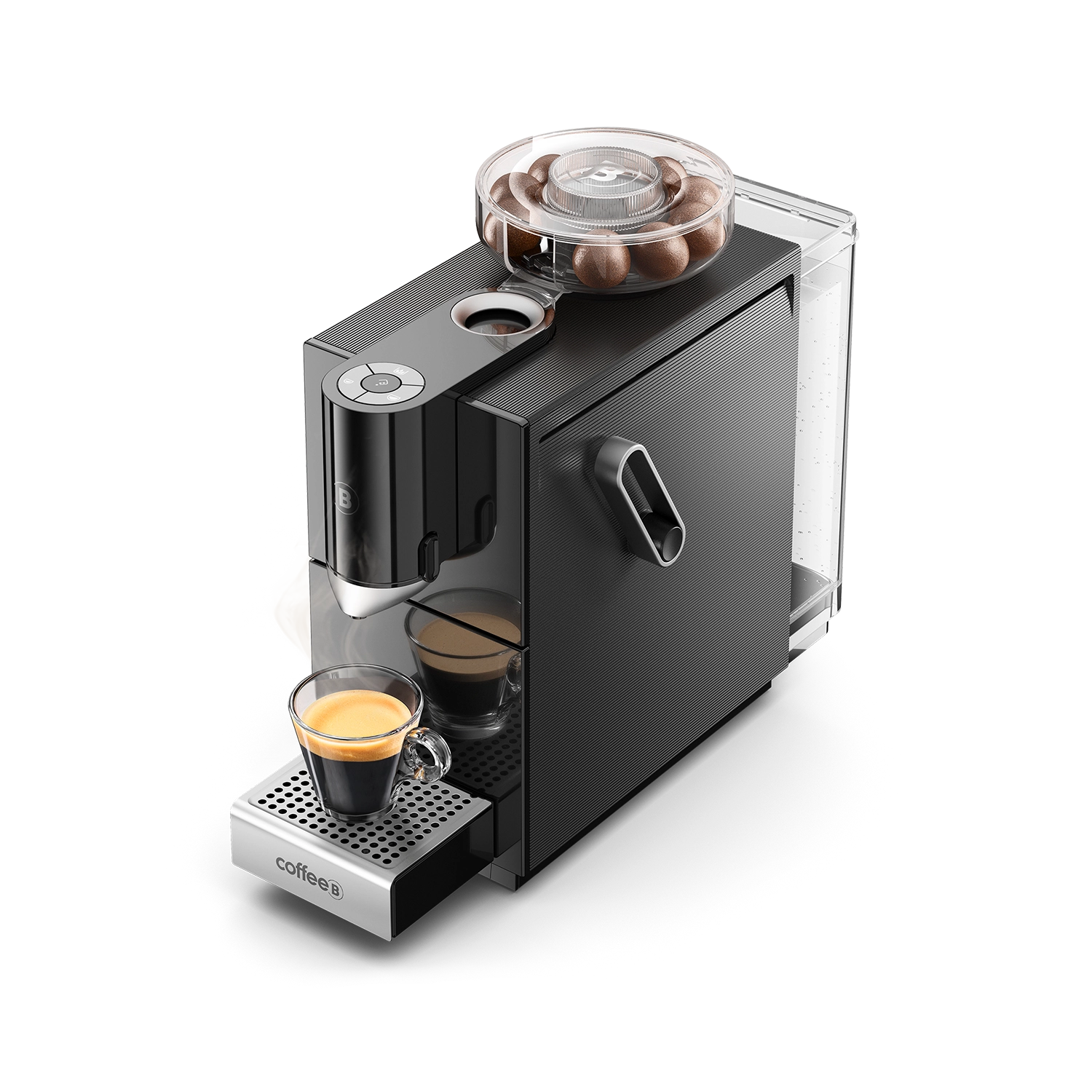
That process was anything but smooth. The team described their ambition, a capsule system without a capsule, as trying to land on the moon without space travel. There were countless dead ends: machines built, adjusted, scrapped and rebuilt because handling a casing-free ball posed mechanical problems no one had solved before. Siefarth championed the spherical shape for its almost magical feel, even though, as she freely admits, a sphere is mathematically difficult to extract coffee from, which is why her team engineered a brewing unit that gently reshapes the ball into a cylinder mid-extraction.
"Having worked on conventional coffee capsules myself, I knew how much material was required for every single cup. CoffeeB gave us the opportunity to rethink the system starting on a blank page and creating a natural alternative." - Caroline Siefarth, Coffee Research & Development Expert, Food Technologist behind CoffeeB
She even tested the compostability herself during development, discarding spent Coffee Balls in her own garden and documenting how they broke down in the soil within weeks. As she told Fast Company: “It completely biodegrades in weeks by just putting the used balls in regular soil.” And it’s that combination of rigorous material science and a relentless focus on the cup that makes the innovation as trustworthy as it is clever.
What the Future of Sustainable Coffee Looks Like
CoffeeB isn't trying to win a slice of the existing capsule aisle. It's pointing at where the whole category is heading. The team believes the no-pod system is the future of portioned coffee, and that aluminium and plastic capsules will be phased out over time, a transition they compare to the shift towards electric cars: inevitable and substantial, even if it takes time for habits and infrastructure to catch up.
"Single-serve coffee won't disappear from the shelves. It will stay. Consumers love the convenience. The breakthrough behind CoffeeB was finding a way to keep that convenience while removing the traditional capsule. It's a completely new approach to portioned coffee." - Caroline Siefarth, Coffee Research & Development Expert, Food Technologist behind CoffeeB
The direction of travel is clear: more natural materials replacing petroleum-based ones, more iconic guest roasters joining an open platform, and a category that mainstreams the circular economy rather than chasing better recycling. The consumer who arrives now isn't late; they're early.
"The next generation of coffee innovation won't be about adding complexity. It will be about rethinking existing systems and using natural materials in smarter ways." - Caroline Siefarth, Coffee Research & Development Expert
CoffeeB Is Now Available in the UK
The future of sustainable coffee is here, and it’s available to buy in the UK now. Interested in being one of the early ones? You can shop the Founders Bundle now, or, if you prefer your claims independently brewed, you can read more about our UK launch in The Grocer.
Related Products
Continue reading
Why We Built CoffeeB: The Story Behind the Brand
Why should great single-serve coffee create so much waste? Discover how five years of innovation led to a completely new capsule-free system built around great coffee and no unnecessary wa...
The Future of Sustainable Coffee: Science, Innovation and Why CoffeeB Is Different
Discover the future of sustainable coffee with CoffeeB's launch in the UK. Learn how science and innovation replaced single-use pods with a garden-compostable coffee ball.